



Small St. Brigid's Cross Charm
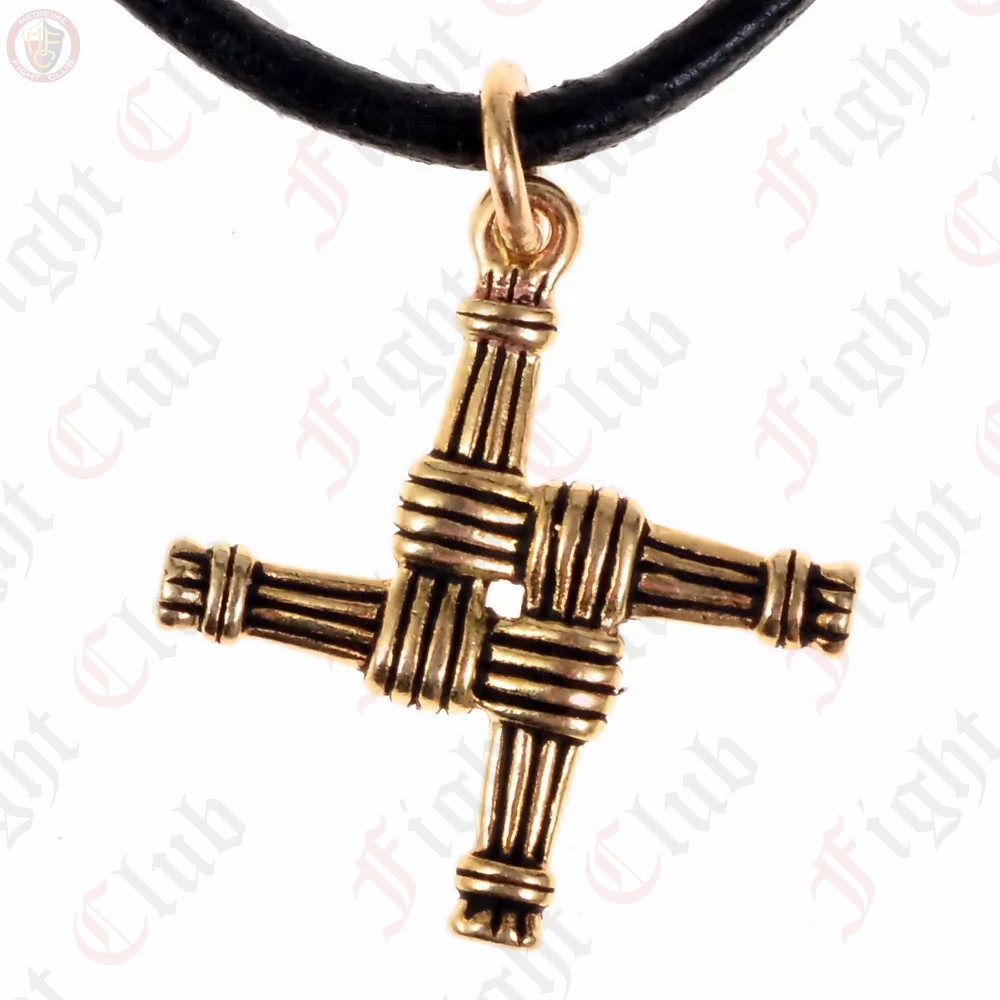
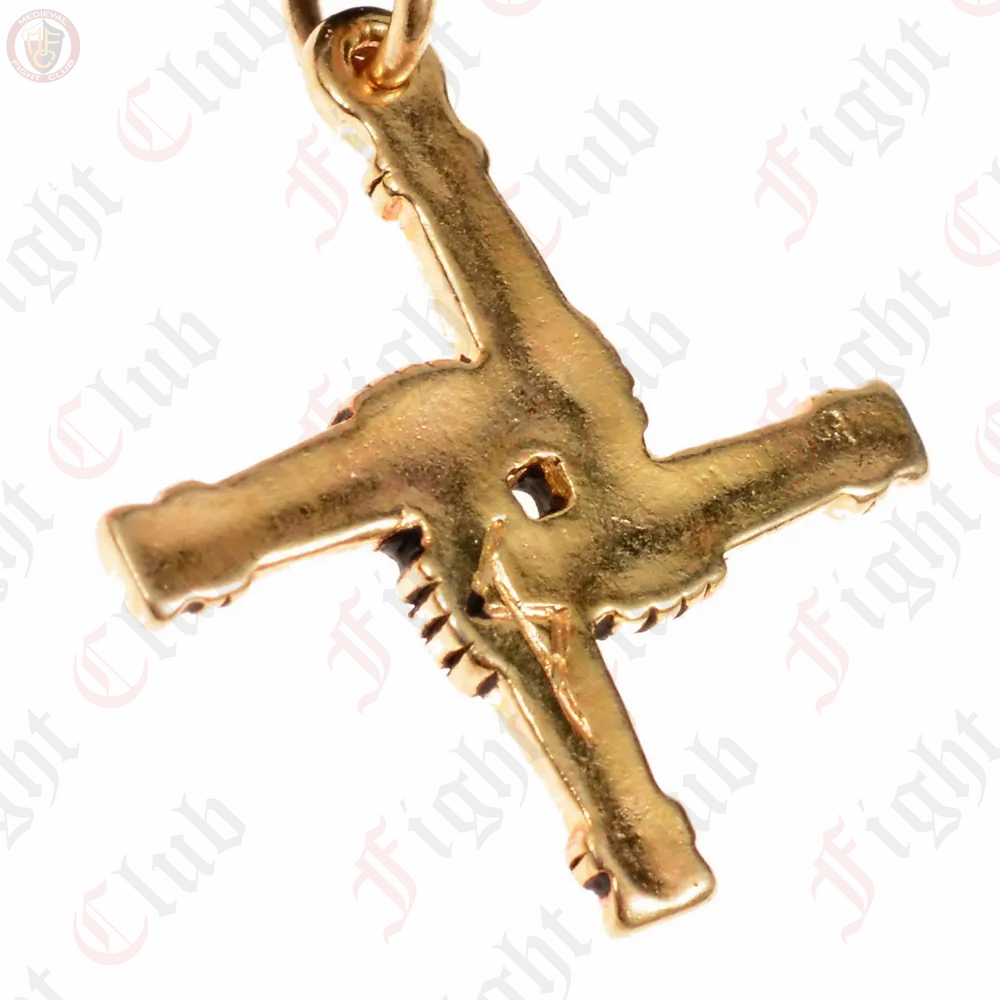


The St. Brigid's Cross is traditionally made in Ireland from woven rushes. It has four arms, the ends of which are tied together, forming a woven square in the middle. The St. Brigid's Cross is associated with Brigid of Kildare, one of the three patron saints of Ireland alongside St. Patrick and St. Columcille, named after Saint Brigid of Kildare, who died in Kildare on 1 February 523.
The crosses are made in Ireland on the eve of St. Brigid's Day, 1 February, and then placed above entrance doors or windows to protect the house and its inhabitants from fire, hunger and evil. The St. Brigid's Cross in Ireland is probably older than Christianity. In pre-Christian Irish-Celtic mythology, the goddess Brigid was one of the ‘Tuatha Dé Danann’, which means ‘people of the goddess Danu’.
In Christianity, St. Brigid and her cross were linked by a story in which she wove such a cross at the deathbed of her father, who, when he heard what the symbol of the cross meant, asked to be baptised. The Cross of Saint Brigid, along with the shamrock and the harp, is one of Ireland's most widely recognised symbols. It was formerly the symbol of the Irish Department of Health and still adorns the logo of An Bord Altranais, the Irish Nurses and Midwives Association.
A 1 m long black leather cord is included with the St. Brigid's charm.
Dimensions
Area: 2 x 2.2 cm (same as original)
Material: Bronze
No reviews found
 Squire Wulfric (Wulfie)