



Flying Phallus Pendant - Bronze
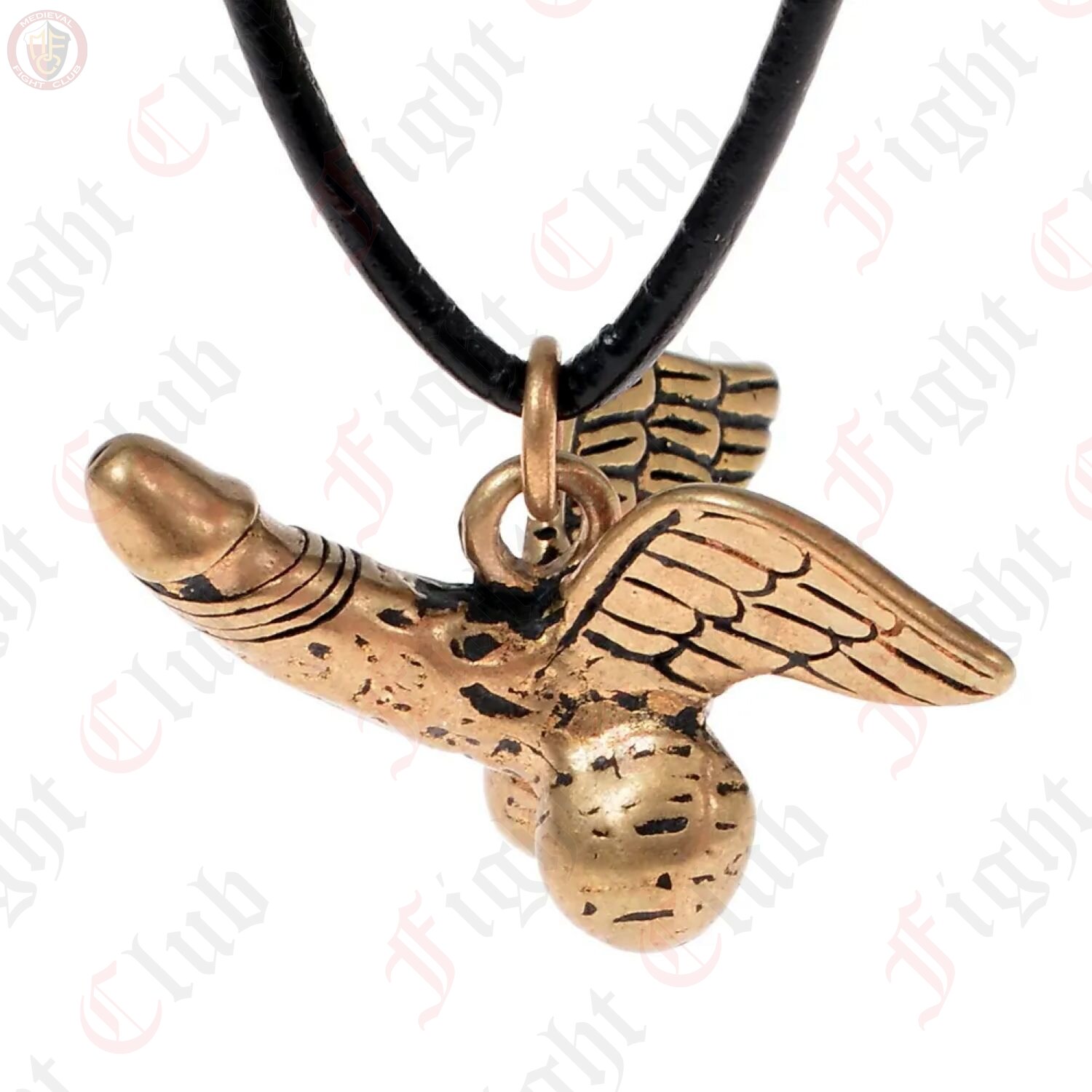
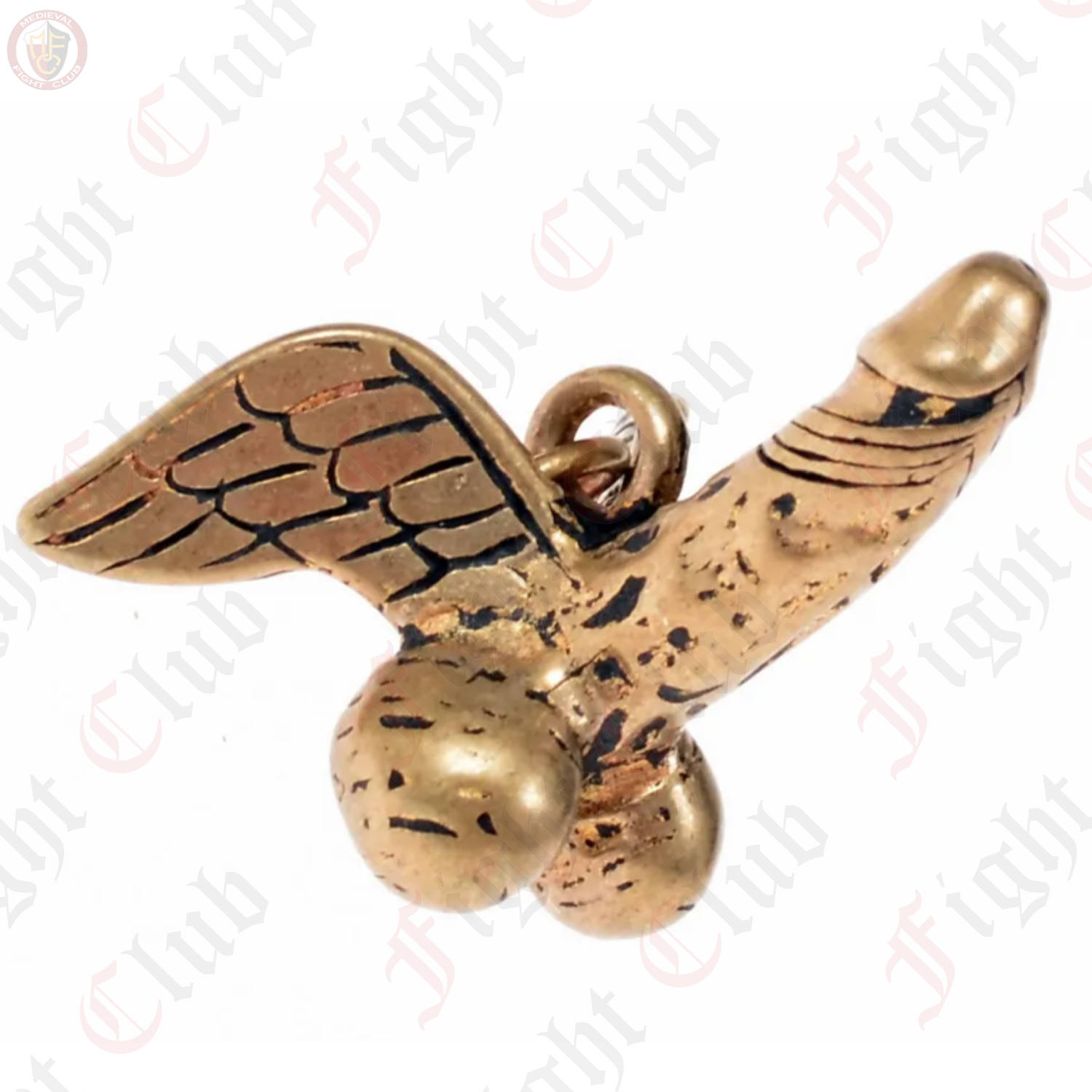


A pendant of a winged phallus inspired by historical models from Roman antiquity. The historical model for this phallus with wings comes from a private auction and dates to the first century AD.
Phallus pendants with wings were called Fascinum by the Romans and were supposed to protect against the evil eye. Various forms of phallus pendants are still known from the Middle Ages, and they are also found in many cultures outside Europe.
For the Romans the winged phallus was not only a sign of fertility and thus emblematic of wealth and prosperity, it was also generally regarded as a bringer of salvation that could ward off evil, especially the evil eye. For this reason, phallic pendants with and without wings were even worn by children as protective amulets and were sometimes even attached to the harnesses of Roman officers.
In some areas of Italy, a small horn is still worn around the neck as a good luck charm, the origin of which goes back to those Roman phallic pendants. An obscene context was not connected with the flying phallus pendants of the Romans because in antiquity sexuality was not seen as something sinful, but quite the opposite, as something positive and blessing-giving.
Dimensions
Volume: 2.5 x 2.5 x 1.5 cm
Material: Bronze
No reviews found
 Squire Wulfric (Wulfie)