



Winged Phallus Amulet
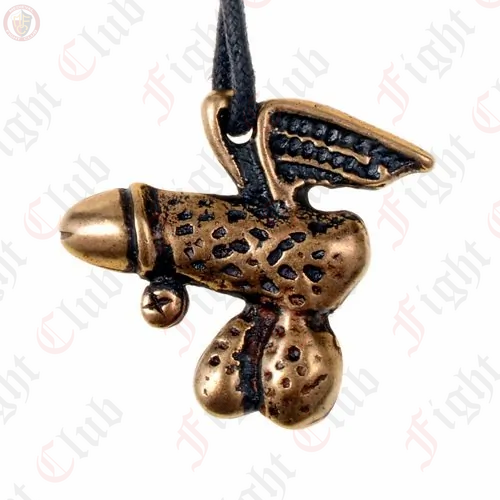
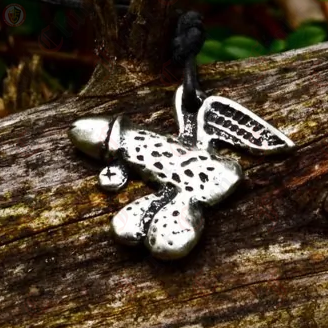


This pendant with the motif of a winged phallus with bells was found in the Netherlands. The phallus amulet was made of pewter at the time and dates from the period between 1375 and 1425. The winged phallus pendant carries a small bell on a ribbon. It is the most widespread "indecent" pewter badge of this kind in the late Middle Ages. Especially in the Netherlands and in France, pendants like this phallus amulet were ubiquitous in the Middle Ages, they appear in numerous finds. Phallus representations were often sewn directly onto clothing.
Phallic amulets have appeared in many different forms in the history of mankind. They were often said to have a magical protective function and to ward off the evil eye. Since ancient times, the phallus was considered a lucky charm and was often worn as an amulet, even by children. The phallus was a symbol of prosperity and fertility and was supposed to ward off mischief. Even today, it is customary in some areas of Italy to wear a stylised phallus as a good luck charm.
This amulet is supplied with a 1 m cotton cord.
Dimensions
Length: 3.5 cm
Width: 4 cm
Material: Zinc alloy in brass colour
No reviews found
 Squire Wulfric (Wulfie)